



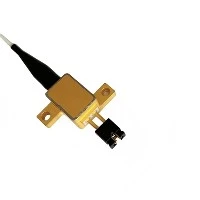
He-Ne laser is a gas laser that uses helium and neon as working media and mainly outputs red laser with a wavelength of 632.8nm. The application fields of He-Ne laser are very wide, including scientific research, industrial measurement, medical applications, etc.

The wide application of He-Ne laser in scientific research reflects its important position in modern science and technology. Whether it is precise measurement in basic scientific research or as a teaching tool in scientific education and laboratory demonstration, He-Ne laser has demonstrated its unique value and wide applicability. Through these applications, He-Ne laser not only promotes the progress of science, but also stimulates the interest and innovative thinking of future scientists.
1. Spectroscopic research
a. Accurately measure the energy level structure of atoms and molecules
He-Ne laser is mainly used for high-resolution spectral experiments in spectroscopy research. It can provide a single wavelength and high stability light source. Using He-Ne laser, researchers can accurately measure the absorption and emission spectra of atomic and molecular systems.
Through these spectral data, scientists can determine the energy level structure of atoms and molecules, which is crucial for the study of quantum physics and molecular physics. For example, by analyzing the fluorescence spectrum induced by He-Ne lasers, researchers can measure the vibration-rotation structure of molecules very accurately.
b. Analyzing the composition and state of matter
He-Ne lasers are also widely used to analyze the chemical composition and physical state of matter. For example, in chemical analysis, laser induced breakdown spectroscopy (LIBS) using He-Ne lasers as light sources can non-destructively analyze the chemical composition of solid, liquid or gas samples.
In addition, He-Ne lasers are used in the field of solid physics to detect the optical constants and electronic properties of materials, such as measuring the band gap of semiconductor materials.
2. Optical experiments and education
a. As a light source for optical experiment demonstrations
In optical experiments and demonstrations, He-Ne lasers are often used as light sources to demonstrate various optical phenomena such as interference, diffraction and polarization due to their high directivity and good spatial coherence.
Using He-Ne lasers, double-slit interference experiments can be performed to demonstrate the wave-particle duality of light, or the diffraction pattern of light can be demonstrated by irradiating diffraction gratings with different slit arrangements. These experiments not only deepen students' understanding of optical principles, but also demonstrate the application capabilities of laser technology.
b. Case analysis of application in physics education
In physics education, He-Ne lasers help teachers visualize abstract physical concepts and enhance students' learning experience.
For example, teachers can use He-Ne lasers and simple lens combinations to demonstrate how to perform optical imaging by adjusting the lens spacing, thereby introducing the concepts of light focusing and divergence.
In addition, the combination of rotating mirrors and helium-neon lasers can intuitively demonstrate the temporal coherence of light, such as introducing changes in optical path difference in Young's double-slit experiment to observe the disappearance and reappearance of interference fringes.
The application of He-Ne lasers in the field of medical health demonstrates its important position in modern medicine. Whether in delicate ophthalmic surgery or in promoting the natural recovery of the body, He-Ne lasers have made important contributions to improving patients' treatment efficiency and quality of life. With the advancement of technology and the support of more clinical data, it is expected that He-Ne lasers will have more extensive applications and development in the field of medical health in the future.
1. Ophthalmic surgery
a. Application in retinal welding and repair
He-Ne lasers are particularly used in retinal welding and repair surgery in the field of ophthalmology. Due to its moderate penetration and low heat generation, the He-Ne laser can precisely irradiate the damaged area of the retina, allowing doctors to weld the detached retina to avoid serious visual impairment or blindness.
This type of surgery requires extremely high precision and control, and the He-Ne laser is an ideal choice with its stable and controllable output.
b. Statistical analysis of surgical success rate and patient recovery data
Retinal welding surgery using He-Ne lasers usually has a high success rate. According to statistics, the success rate of surgery can reach more than 80%, significantly reducing the risk of postoperative complications.
The patient's recovery time is also relatively short, and most patients can feel a significant improvement in vision within a few days after surgery. These statistics not only prove the high efficiency of He-Ne lasers in ophthalmic surgery, but also show its important role in improving the quality of life of patients after surgery.
2. Physical therapy and rehabilitation
a. The role of low-power lasers in promoting cell regeneration
The application of He-Ne lasers in the field of physical therapy and rehabilitation, especially in promoting cell regeneration, is increasing. Low-power He-Ne lasers can stimulate cell metabolic activities and accelerate cell division and regeneration processes.
This therapy is widely used to promote wound healing, reduce inflammation, and treat chronic pain. For example, when treating chronic ulcers and some skin diseases, low-power He-Ne laser treatment can significantly speed up healing and improve treatment outcomes.
b. Clinical application cases and effect evaluation
In physical therapy practice, the application effects of He-Ne lasers have been verified through multiple clinical cases. For example, for common conditions such as arthritis and muscle pain, patients treated with He-Ne lasers often report reduced pain and improved mobility.
In addition, this treatment method has been widely accepted by patients because it is non-invasive and low-risk. Clinical studies have also shown that regular He-Ne laser treatment can effectively promote the repair of damaged nerves and help patients recover function faster.
The application of He-Ne lasers in industry and manufacturing not only demonstrates its ability to improve production efficiency and product quality, but also reflects its key role in promoting the modernization of manufacturing. Through precise measurement and calibration, He-Ne lasers ensure the accuracy and consistency of the manufacturing process; and in terms of material processing, it provides an efficient, precise and adaptable processing tool. With further development of technology, He-Ne lasers are expected to have greater potential in future industrial applications.
1. Precision measurement and calibration
a. Application in length measurement and instrument calibration
He-Ne lasers are widely used in length measurement and equipment calibration in the industrial field due to their high directivity and stable output power. In situations where high-precision measurement is required, such as dimensional measurement of mechanical parts or quality control processes, He-Ne lasers can provide accurate reference beams.
Non-contact measurement using this laser can quickly and accurately determine the size and shape of the workpiece, ensuring that the quality of the manufacturing process meets the design specifications.
b. Case study of improving industrial manufacturing precision
In the automotive manufacturing industry, He-Ne lasers are used to calibrate the precise position of body assembly robots, thereby ensuring that each part of the car body can be accurately matched, improving the quality and aesthetics of the entire vehicle.
For example, on a welding line, by using He-Ne lasers to accurately locate the robot's welding points, material waste can be reduced and welding efficiency and quality can be improved.
2. Material processing
a. Application in micro-machining technology
He-Ne lasers play a key role in material micro-machining technology. Due to its high energy density and fine focusing ability, He-Ne lasers are particularly suitable for micro-machining tasks that require extremely high precision, such as micro-cutting of semiconductor chips, fine marking, and micro-drilling.
These processes usually require extremely low heat-affected zones and high precision, and He-Ne lasers can meet these requirements well.
b. Efficiency comparison analysis with traditional processing methods
Compared with traditional mechanical processing methods, laser processing technology using He-Ne lasers has many advantages.
First, laser processing is a non-contact processing method that produces almost no mechanical stress, reducing material damage and tool wear. Second, laser processing can be performed on a variety of hard, brittle or flexible materials, greatly enhancing the flexibility of processing.
In addition, the speed and accuracy of laser processing are usually far superior to traditional methods, greatly improving production efficiency and product quality.
The application of He-Ne lasers in the field of communications is multifaceted, especially in optical fiber communication systems, signal transmission efficiency and its stability.
Role in optical fiber communication systems: He-Ne lasers are mainly used as light sources in optical communications, especially in early optical fiber communication systems. Its 633 nm wavelength output is widely used in experiments and educational demonstrations of optical fiber communications. Although modern efficient communication systems have adopted more semiconductor lasers, He-Ne lasers provided important technical support for the development of optical fiber communication in the early days.
Analysis of signal transmission efficiency and stability: In terms of signal transmission, the laser generated by He-Ne lasers has high directivity and phase coherence, which makes it show low signal attenuation and high stability in long-distance transmission. This characteristic makes He-Ne lasers used in atmospheric optical communication and space optical communication. However, compared with the needs of modern communication systems, the output power of He-Ne lasers is low, which limits its application in high-power demand occasions.
Comparison with other types of laser performance: Compared with other types of lasers, such as semiconductor lasers, He-Ne lasers have certain advantages in cost, reliability and beam quality. He-Ne lasers can produce highly stable coherent beams with relatively low maintenance costs. However, semiconductor lasers perform better in modulation speed, energy efficiency and integration, and are more suitable for modern high-speed optical fiber communication networks.
Application of He-Ne Lasers in Defense and Security
The application of He-Ne lasers in defense and security is multifaceted, mainly reflected in night vision monitoring and target marking, the application of long-distance laser communication systems, as well as security analysis and potential risk discussions.
Night Vision Monitoring and Target Marking:
He-Ne lasers play an important role in night vision monitoring, and their 633 nm red laser beam performs well in low-light environments and can provide clear visual images. This laser beam is used to enhance the performance of night vision equipment, allowing surveillance personnel to clearly identify targets in completely dark environments.
In terms of target marking, He-Ne lasers are used for precise marking due to their high directivity and good focusing ability. This laser can temporarily mark the target without destroying it, thereby accurately guiding ground or air strikes during military operations.
Application Cases of Long-Distance Laser Communication Systems:
He-Ne lasers also have important applications in long-distance laser communication systems. Due to their high directivity, He-Ne lasers can effectively transmit data signals and maintain communication stability and reliability even under complex atmospheric conditions.
A specific application case is the use of He-Ne lasers by the US military for point-to-point data transmission in battlefield communications. This system can be deployed quickly without the support of other communication infrastructure, providing efficient communication means for the front line.
Security analysis and potential risk discussion:
Although He-Ne lasers have significant advantages in the field of defense and security, their use is also accompanied by certain risks. For example, improper operation of laser equipment may cause visual damage, especially when operating at night, special attention should be paid to avoid looking directly at the laser beam, and laser protective glasses should be worn.
Another potential risk is that laser communications may be physically interfered with or hacked, which requires the introduction of advanced encryption and anti-interference technology when designing communication systems to ensure the security and integrity of communications.
In summary, the application of He-Ne lasers in the field of defense and security not only demonstrates its applicability and stability in a variety of complex environments, but also highlights its importance in improving modern combat effectiveness. However, in order to maximize the use of these high-performance devices, it is necessary to strictly control the conditions of use and take appropriate safety measures to ensure the effectiveness and safety of the technology, such as good laser protection and wearing laser protective glasses.
The combined impact of He-Ne lasers in different fields is far-reaching. In scientific research, they are generally considered to be a very important tool in many fields due to their versatility and adaptability, which has had a lasting impact on the development of modern science and technology.
JTBYShield Laser Technology Co., Ltd We are a professional manufacturer of laser modules. We have a professional R&D team and accept ODM and OEM,Laser module parameters can be customized according to your requirements.
If you are interested, we will be very happy to talk to you further. We look forward to your reply and hope to be your reliable partner.
Contact information:
If you have any ideas, feel free to talk to us. No matter where our customers are and what our requirements are, we will follow our goal to provide our customers with high quality, low prices, and the best service.
 Email:info@loshield.com
 Tel:0086-18092277517
 Fax: 86-29-81323155
 Wechat:0086-18092277517


