


Laser engraving processing is based on numerical control technology, and the laser is the processing medium. The physical denaturation of the processing material in the instant melting and gasification under the irradiation of laser engraving can make laser engraving achieve the purpose of processing. Laser engraving is the use of laser technology to write text on an object, this technology carved out the word is not notched, the surface of the object is still smooth, and the writing will not wear.

Laser processing features:
No contact with the surface of the material, not affected by mechanical movement, the surface will not be deformed and generally does not need to be fixed. It is not affected by the elasticity and flexibility of the material and is convenient for the processing of soft materials. High processing precision, fast speed, and a wide range of applications.
Common ways
1. divided into laser cutting, laser engraving, laser marking, glass (crystal) carving, and so on.
2. the process is through the laser engraving machine, laser marking machine, laser cutting machine, and other equipment to achieve.
Common material
1. Non-metallic material processing (co2 laser): Plexiglass, wood, leather, cloth, plastic, printing rubber plate, two-color plate, glass, synthetic crystal, horn, cardboard, density board, marble, jade, etc
2. Metal materials processing (YAG laser) common metal materials.
Principle of engraving
Laser direct engraving of the copper plate has been considered technically not feasible, but the laser can directly engrave zinc. Swiss MDC company through the improvement of the plate-making process to achieve direct laser engraving. A thin layer of nickel is first plated on the copper roller, and then copper is plated on the surface, followed by a layer of zinc. This layer of zinc absorbs the laser energy and evaporates, along with the copper beneath it, creating a web of ink. After carving, the roller is finally coated with a hard layer of chromium, just like any other carving roller. YAG lasers with a power of about 500W were also developed, capable of carving 70,000 mesh holes per second.
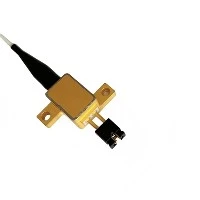
Direct laser engraving system is mainly composed of 3 parts: high energy laser, laser transmission system, and optical system, by adjusting the focal length, to adjust the energy per unit area.
Cause
With the rapid development of optoelectronic technology, the application range of laser engraving technology is more and more extensive, and the precision of engraving is higher and higher. The four most fundamental elements that affect laser engraving are engraving speed, laser power, engraving precision, and material. In order to achieve a certain engraving effect on a specific material, it is required to absorb a certain energy of the laser, this energy should be regarded as the laser energy absorbed by the material = laser power/engraving speed. Simply put, to improve the laser energy absorbed by the material, the laser power should be increased or the engraving speed should be reduced, and the final method depends on the material and the final engraving effect. Generally speaking, users will avoid slowing down because it will reduce productivity. In fact, it is not only the engraving speed that affects the engraving efficiency but also the engraving precision.
Main function
Summary
Using laser engraving and cutting, the process is very simple, just like using a computer and printer to print on paper. You can use a variety of graphics processing software in the Win98/Win2000/WinXP environment, such as CorelDraw, etc., scanned graphics, vectorized graphics, and a variety of CAD files can be easily "printed" to the engraving machine. The difference is that printing applies toner to paper, while laser engraving is the laser beam to wood products, acrylics, plastic sheets, metal sheets, stone, and almost all other materials.
1. Lattice carving
Dot matrix engraving resembles high-definition dot matrix printing. The laser head swings left and right, carving out a line composed of a series of points each time, and then the laser head moves up and down at the same time to carve out a number of lines, and finally constitute a full page of the image or text. Scanned graphics, text, and vectorized graphics can be carved using a dot matrix.
2. Vector Cutting
Unlike dot matrix engraving, vector cutting is carried out on the outer outline of the picture. We usually use this mode to cut through wood, acrylic, paper, and other materials, and can also be marked on a variety of material surfaces.
3. Engraving speed
Engraving speed refers to the speed at which the laser head moves, usually expressed in IPS (inches/second), and high speed brings high production efficiency. Speed is also used to control the depth of the cut, for a particular laser intensity, the slower the speed, the greater the depth of the cut or engraving. You can adjust the speed either by using the engraving panel or by using your computer's print driver. On a scale of 1% to 100%, the adjustment is 1%. ,
4. Engraving strength
Engraving intensity refers to the intensity of the laser beam on the surface of the material. For a particular engraving speed, the greater the strength, the greater the depth of the cut or engraving. The greater the strength, the greater the speed, and the deeper the cutting.
5. Spot size
The spot size of the laser beam can be adjusted by using lenses of different focal lengths. Small spot lenses are used for high-resolution engraving. Large spot lenses are used for lower-resolution engraving, but for vector cutting, it is the best choice. The new device comes standard with a 2.0-inch lens. Its spot size is in the middle, suitable for various occasions
Advantage
1. Wide range: carbon dioxide laser can carve and cut almost any non-metallic material. And the price is low!
2. Safe and reliable: non-contact processing will not cause mechanical extrusion or mechanical stress to the material. No "knife marks", do not harm the surface of the workpiece; Will not deform the material;
3. Precise and meticulous: the processing accuracy can reach 0.02mm;
4. Saving and environmental protection: small beam and spot diameter, generally less than 0.5mm; Cutting processing saves materials, safety, and health;
5. Consistent effect: Ensure that the processing effect of the same batch is completely consistent.
High speed: high-speed engraving and cutting can be carried out immediately according to the computer output pattern.
6. Low cost: not limited by the number of processing, for small batch processing services, laser processing is cheaper.
Contact information:
If you have any ideas, feel free to talk to us. No matter where our customers are and what our requirements are, we will follow our goal to provide our customers with high quality, low prices, and the best service.
 Email:info@loshield.com
 Tel:0086-18092277517
 Fax: 86-29-81323155
 Wechat:0086-18092277517


