


For gun owners, accuracy isn't just a preference; it's paramount. From competitive marksmen vying for perfect scores to hunters ensuring an ethical, clean kill, a properly sighted firearm is fundamental. Yet, the process of zeroing a scope can be time-consuming, and the quest for that elusive "bullseye" often requires dozens of rounds – costing time and money. Laser bore sights promise a smarter beginning to this journey, promising significant savings on both fronts. But as the original news description astutely highlights, navigating the world of bore sights involves wading through "a lot of mystery and confusion," compounded by an abundance of subpar products that fail to deliver. This guide aims to shine a light through the fog, empowering shooters to make informed choices.
I. How Bore Sights Actually Work
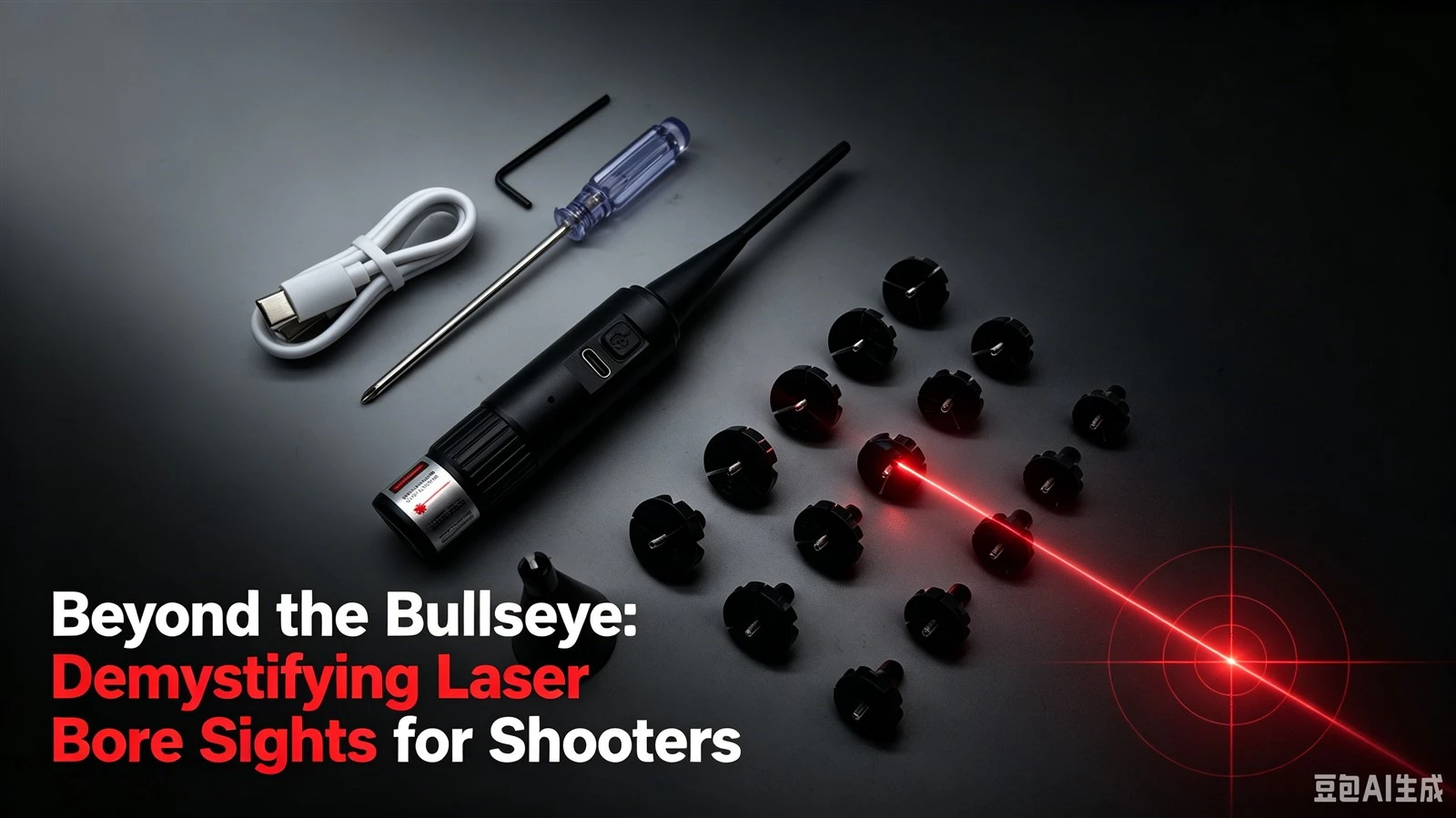
The core principle behind a laser bore sight is elegantly simple. The device is inserted or installed directly into the firearm's barrel, mimicking the position of a live round. When activated, it emits a highly visible, focused laser beam projected downrange. Crucially, this laser aims to be perfectly aligned with the bore axis.
The shooter then looks through their optical sight (scope, red dot, etc.). The next step is alignment: adjusting the windage and elevation turrets on the optic until the reticle (crosshair or dot) centres precisely over the bright laser point projected on a target, ideally at a controlled distance (e.g., 25 or 100 yards). The theory is that this preliminary alignment brings the optic into a 'ballpark' alignment with the bore's central axis.
II. Why the "Ballpark" Matters: Translating Promise into Practical Savings
Historically, the initial sighting-in process involved firing multiple rounds, making adjustments, and repeating until groups centred on the target. Each trigger pull costs money. Every adjustment takes time. Laser bore sights drastically shorten this initial phase.
1. Ammunition Cost Savings: A significant portion of ammunition consumed during initial zeroing is for correction, not training. By establishing a close baseline alignment with a laser, shooters can often get 'on paper' at their intended zeroing distance with significantly fewer live rounds – sometimes just a handful for final fine-tuning. At today's prices, saving 10-20 rounds per sighting session adds up quickly over multiple firearms and sessions.
2. Time Efficiency: Running back and forth between the bench and target to read groups is time-intensive. Fixed boresights allow shooters to potentially establish that baseline alignment before even stepping foot on a live range, optimizing range time for final confirmation and minor tweaks. Archers benefit too, ensuring their sight pins are starting closer to true.
3. Convenience: Initial alignment can be performed at home, in a garage, or in any safe environment where the laser can be projected onto a wall or target over a known distance. This is invaluable for those with range access limitations.
4. Range Strategy: Arriving at the range with a pre-aligned scope means sessions can focus on confirming zero, testing different loads, or actual practice. It shifts the purpose of range time.
Navigating the Options: Caliber-Specific, Universal & Arbor Styles
Understanding the main types is crucial to avoiding inefficient choices:
Caliber-Specific Cartridge Inserts:
How they work: Designed like dummy rounds chambered for specific calibers (.223, 9mm, .308, etc.). They insert directly into the chamber and usually activate via a firing pin simulator or battery.
Pros: Excellent concentricity due to precise chamber fit; mimics bullet alignment; generally highly accurate as long as seated correctly. Preferred for bolt-actions and rifles.
Cons: Requires purchasing multiple units for different calibers; precision fit means one unit per specific cartridge (e.g., .223 vs 5.56); mechanism reliability and battery quality vary vastly.
Universal or Magnetic Lenses:
How they work: A device with a laser mounted inside a rod or lens that is inserted into the muzzle end. Magnetic models cling magnetically to barrel crowns; others may fit via concentric sleeves or spring-loaded arbors pulling the laser barrel center.
Pros: One unit (often with adapters) can cover a wide range of calibers (.22 to .50+), offering significant cost savings versus cartridge inserts for multi-caliber owners; installation is muzzle-end.
Cons: Alignment critically depends on a tight, centered muzzle fit. Poor fit = inaccurate starting alignment. Reliability hinges on build quality. The most variable category.
Solid Arbor Sights:
How they work: Similar to universal, but use spring-loaded, expanding arbors inserted from the muzzle. The arbor expands inside the barrel, theoretically centering the laser shaft.
Pros: Can also cover multiple calibers with a single unit and changing arbor heads. Less reliance on magnetism.
Cons: Arbor fit and centering precision *is everything.* Requires proper moa calculation since laser exits barrel at muzzle; arbor wear can occur.
Buyer Beware:
The promise of a bore sight is often negated by its execution in low-cost models.
Key pitfalls include:
Lousy Lasers: Weak intensity visible only in twilight; poor focus resulting in vague dots; easily knocked out of alignment within the unit; inconsistent activation.
Subpar Construction: Flimsy materials; ineffective springs in arbors; magnets that slip; plastic cartridges that don't hold precise battery contacts or get stuck mimicking live round extraction.
Doubtful Design: Claims of versatility that don't translate to actual reliable fit across stated calibers.
Features You Can't Afford to Ignore
Focusing on engineered value:
1. Material Integrity: Metal construction around essential contact points is non-negotiable for cartridge inserts and arbors. Forgiveness is low for flimsy mounts. Rigid plastics beyond necessary allowances hint at quality issues.
2. Laser Power & Collimation: Aim for multi-class/tier II lasers visible in bright daylight conditions at least 25 yards. Prefer models stating ANSI limits. A crisp, tightly focused dot shows solid optical engineering. Green lasers typically offer better daytime visibility over red for given power ratings but draw more current. Quality laser modules resist shock and vibration.
3. Secure Activation: Positive, reliable on/off mechanisms matter - be it firing pin simulators that feel solid to threaded battery contacts that won't let go on extraction.
4. Precision Engineering Affects Accuracy: For cartridge: Chamber-fit tightness? Quality dummy analogs? Consistent power delivery?
For universal arbor/magnetic: Centering mechanism robustness? Core rod rigidity? Spring tension integrity?
5. Accuracy Claims: Be suspicious of claims far beyond "rough alignment" capabilities. 1 MOA at 100y via bore sighting alone? Highly doubtful unless under lab bench conditions! Expect laser specs lists and realistic application statements.
6. Brand Reputation: Research counts. Established names in optics or shooting accessories like Sightmark, Wheeler Engineering, or Frankford Arsenal usually employ better QC than mystery importers. Third-party testing feedback is gold.
Cost vs. Value Strategy:
Caliber-specific: Worth the higher per-unit price for rifle/long-gun owners needing one or two caliber tools but demand top cartridge fit design and good laser reliability from reputable sources.
Universal: Potentially excellent value *only* when the centering mechanism is robust against barrel variances. Often worth spending slightly more for known midsized brands over bottom-tier direct imports.
Beyond Calibers: Insertion Realities
Muzzle Insert Challenges: Fitting centers rely on barrel crown uniformity - worn military rifles or non-square cut barrels challenge even premium units.
Special Platforms: AR platforms handling shorter barrels need designed lens structures. Concealed carry pistols requiring deep bore insertion require compact cartridges & safe ejection design.
Maintenance: Protect laser lenses using included protective covers. Remove batteries after extended storage to prevent leaks damaging expensive tools.
The Bottom Line for Accuracy Seekers
Laser bore sights can deliver significant time and ammunition cost reductions to every shooter effected by modern expenses. They are not magic "zeroing" pills but powerful initial alignment aids. Far too many "just get one" recommendations lead owners toward the disappointment and false starts generated by hyped junk units. By understanding the functional variations, recognizing key engineering priorities differentiating superior from inferior units, and investing selectively in confirmed brands for your specific caliber & firearm platforms, laser bore sights indeed fulfill their cost-savings role in savvy shooters' toolkits beyond any pun. High-performance sighting starts with understanding how to effectively deploy this tool within its limitations using physics, not fantasy promises.
Contact information:
If you have any ideas, feel free to talk to us. No matter where our customers are and what our requirements are, we will follow our goal to provide our customers with high quality, low prices, and the best service.
 Email:info@loshield.com; laser@loshield.com
 Tel:0086-18092277517; 0086-17392801246
 Fax: 86-29-81323155
 Wechat:0086-18092277517; 0086-17392801246


