



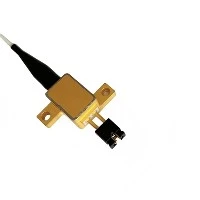
As an emerging technology, laser modules have brought significant changes and opportunities to the textile industry. By integrating components such as lasers and optical elements, it achieves efficient and precise laser output, and can be applied to the cutting, engraving, punching and other processing links of textile fabrics to improve processing efficiency and quality. At the same time, laser modules have also promoted the intelligence and automation of textile production, such as using them to detect fabric defects and measure dimensions, reduce manual intervention, and improve production accuracy. In addition, the application of laser modules has also promoted innovative designs in the textile industry, such as the development of laser printing technology with special effects, enriching product types and styles, and meeting the diverse needs of the market.

As an advanced processing technology, laser modules have significant advantages over traditional processing methods in the textile industry.
1. High precision:
The laser beam can be focused to a very small spot, achieving micron-level processing accuracy, which can meet the textile industry's needs for fine patterns, complex shapes and high-precision cutting.
Traditional processing methods, such as blade cutting and mechanical engraving, are limited by mechanical accuracy and tool wear, and it is difficult to achieve the accuracy level of laser processing.
2. Fast speed:
The laser processing speed is fast, which can achieve high-speed cutting, marking and engraving, greatly improving production efficiency.
For example, the laser cutting speed can reach several meters per minute, which is several times or even dozens of times that of traditional blade cutting.
3. Non-contact processing:
Laser processing is non-contact processing, and the laser beam will not generate mechanical stress on the surface of the material, avoiding damage and deformation of the material.
Traditional processing methods, such as blade cutting and mechanical engraving, are prone to mechanical damage such as extrusion and pulling on the material, affecting product quality.
4. High degree of automation:
Laser modules are easy to integrate with computer numerical control systems to achieve automated processing, reduce manual intervention, and improve production efficiency and consistency.
Traditional processing methods often require manual operation, with low automation, and production efficiency and quality are greatly affected by human factors.
5. Other advantages:
Wide range of processing materials: Lasers can process a variety of textile materials, including natural fibers, synthetic fibers, leather, etc., with a wide range of applications.
Clean and environmentally friendly: Laser processing generates less waste and low noise, and is a clean and environmentally friendly processing method.
Strong flexibility: Laser processing can quickly adjust processing parameters as needed to adapt to different materials and process requirements, with high flexibility.

Specific applications of laser modules in the textile industry
1. Fabric processing
①Laser cutting:
Precise and efficient: The laser beam can accurately cut various fabrics, including natural fibers, synthetic fibers, non-woven fabrics, etc., to achieve complex patterns and hollow effects, and the cutting edges are smooth and burr-free, without the need for subsequent processing.
Application areas: Widely used in clothing, home textiles, shoes and hats, automotive interiors and other fields, such as: lace fabric cutting, curtain lace cutting, car seat fabric cutting, etc.
②Laser marking:
Permanent marking: Use laser to mark on the surface of the fabric, the mark is clear and lasting, not easy to fade and wear, and can mark brand logos, patterns, text, QR codes and other information.
Application areas: Used to enhance product added value and anti-counterfeiting performance, such as: clothing label marking, home textile product traceability, luxury anti-counterfeiting, etc.
③Laser engraving:
Three-dimensional effect: By controlling the laser parameters, patterns and textures of different depths can be engraved on the surface of the fabric, giving the fabric a unique texture and visual effect.
Application areas: used for high-end clothing, home textile products, handicrafts, etc., such as leather carving, denim carving, decorative painting production, etc.
2. Clothing design
① Laser cutting:
High degree of automation: Automatically cut clothing fabrics according to CAD drawings, with fast speed and high precision, which can greatly improve production efficiency and material utilization.
Application areas: Suitable for large-scale production of various clothing, such as suits, shirts, dresses, etc.
② Laser punching:
Precise and beautiful: Holes of various shapes and sizes can be accurately punched on clothing for decoration, ventilation and other functions, and the edges of the holes are smooth and burr-free.
Application areas: used for denim clothing, leather clothing, sportswear, etc., such as jeans hole processing, leather clothing hollow design, sports shoes ventilation hole processing, etc.
③ Laser etching:
Personalized customization: Personalized patterns can be etched on leather, denim and other fabrics to meet consumers' demand for personalized products.
Application areas: used for customized clothing, shoes and hats, luggage, etc., such as personalized T-shirt customization, denim jacket pattern etching, leather bag lettering, etc.

3. Other applications
① Textile testing:
Efficient and accurate: Laser technology can quickly and accurately detect textile defects, composition, thickness and other indicators, improve product quality and production efficiency.
Application areas: Used for quality inspection and control in the textile production process, such as fabric defect detection, fiber composition analysis, fabric thickness measurement, etc.
② Textile equipment manufacturing:
Precision processing: Laser technology can be used for precision parts processing of textile equipment, such as spinneret punching, roller surface treatment, etc., to improve equipment accuracy and performance.
Application areas: Used in the field of textile machinery manufacturing, such as spinning machines, looms, printing and dyeing equipment, etc.

Future development trend of laser modules in the textile industry
1. Technology upgrade: higher, shorter, smaller, lower
Higher power: Higher power laser modules can achieve faster processing speed and deeper processing depth, meeting a wider range of application needs.
Shorter wavelength: Shorter wavelength laser beams can obtain smaller focused spots and achieve higher precision processing, for example: UV lasers are used for fine marking and micro-hole processing.
Smaller volume: Smaller volume laser modules can be more easily integrated into textile equipment to achieve more flexible processing methods.
Lower cost: With the advancement of technology and large-scale production, the cost of laser modules will continue to decrease, making them more widely used in the textile industry.
2. Technology integration: intelligent and digital textile production
Artificial intelligence (AI): AI technology can be used for laser processing path optimization, automatic adjustment of process parameters, automatic identification of defects, etc., to improve processing efficiency and quality.
Big data: By collecting and analyzing data during laser processing, production processes can be optimized, equipment failures can be predicted, and product quality traceability can be achieved.
Internet of Things (IoT): Connecting laser modules to the Internet of Things can realize remote monitoring, fault diagnosis, data sharing and other functions, and improve production management efficiency.
3. Application expansion: smart textiles, wearable devices, etc.
Smart textiles: Laser technology can be used to process smart textiles, for example: integrating sensors, circuits, etc. into textiles to realize functions such as temperature monitoring, heart rate monitoring, and motion monitoring.
Wearable devices: Laser technology can be used to process flexible circuits, sensors and other components of wearable devices to make them lighter, more comfortable and more durable.
Other emerging fields: Laser technology can also be applied to other emerging fields in the textile industry, such as 3D printing textiles, biomedical textiles, etc.
Laser module technology has brought revolutionary changes and unprecedented opportunities to the textile industry. It significantly improves production efficiency and product quality through high-precision, high-speed, non-contact processing methods, while reducing labor costs and material waste. The application of laser technology not only realizes the precise cutting, permanent marking and personalized engraving of complex patterns, but also promotes the development of emerging fields such as smart textiles and wearable devices. In addition, the integration of laser modules with technologies such as artificial intelligence and big data has further promoted the transformation of the textile industry towards intelligence, digitization and greening, creating more innovation possibilities and market competitive advantages for the industry.
Contact information:
If you have any ideas, feel free to talk to us. No matter where our customers are and what our requirements are, we will follow our goal to provide our customers with high quality, low prices, and the best service.
 Email:info@loshield.com
 Tel:0086-18092277517
 Fax: 86-29-81323155
 Wechat:0086-18092277517


