



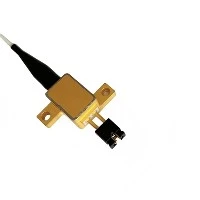
The 1470nm Lasers belongs to the near-infrared spectrum region, and the interaction of lasers with this wavelength in biological tissues mainly involves the absorption of water. In the near-infrared region, the absorption coefficient of water decreases as the wavelength increases, but at 1470nm, the absorption of water is still high enough so that the laser energy can be effectively absorbed by the water in the tissue and converted into heat energy, thereby producing a therapeutic effect. The choice of this wavelength is critical for the depth of penetration and heating efficiency of the laser in biological tissue.
The mechanism of interaction between wavelength and biological tissue:
The wavelength of the 1470nm laser determines its penetration ability in biological tissues. Longer wavelengths can penetrate tissue deeper, but also cause energy dispersion and reduce the local heating effect. The 1470nm laser has a moderate penetration depth in the tissue, which can reach the treatment target area while maintaining sufficient energy density to produce the required thermal effect.
Absorption coefficient in biological tissues:
The absorption coefficient is a physical quantity that describes the degree of attenuation of light when it propagates in a medium. It is related to the properties of the medium (such as water content) and the wavelength of the light. At 1470nm, the absorption coefficient of biological tissue is higher, which means that the laser energy attenuates faster in the tissue. Therefore, the 1470nm laser is more suitable for treating shallower tissues, such as the skin surface or mucosa.
Impact of laser applications:
Due to the high absorption coefficient of 1470nm laser in tissue, it is often used in medical applications where precise control of heating depth is required. For example, in skin tightening, wrinkle removal, dental treatment and certain types of varicose vein treatment, the 1470nm laser is able to deliver enough energy to heat the target tissue while minimizing thermal damage to surrounding healthy tissue.
Application scenarios:
1470nm semiconductor lasers have many applications in the medical field due to their unique wavelength characteristics. including but not limited to:
1. Skin regeneration and firming: By heating the dermis, it stimulates the regeneration and reorganization of collagen.
2. Dental treatment: used for tooth whitening, gum plastic surgery and periodontal disease treatment.
3. Varicose vein treatment: By heating the vein wall, it promotes vein closure and improves blood circulation.
4. Tumor treatment: In some cases, used for interstitial thermotherapy, adjuvant chemotherapy or radiotherapy.
Laser Safety and Efficiency:
When using a 1470nm laser, laser safety must be considered. Operators should wear appropriate protective glasses and ensure that the patient's exposure time to the laser is controlled within a safe range. Additionally, the laser design should include safety features such as emergency stop buttons, laser power controls, and timers. In terms of efficiency, the design of the 1470nm laser should ensure stable laser output and uniform energy distribution to achieve the best results during the treatment process.
1470nm laser is increasingly used in the medical field, especially in urological surgery, showing its unique advantages. Compared with lasers of other wavelengths, 1470nm laser has its obvious characteristics and applicable scenarios.
The following is a specific comparison of the 1470nm laser with the other two wavelengths:
1. 980nm laser: The 980nm laser is a short-wavelength laser. Compared with the 1470nm laser, its absorption of blood is lower. The 1470nm laser has a longer wavelength and can be absorbed by water and hemoglobin at the same time. This makes the 1470nm laser useful in tissue gas treatment. It is more effective when melting and coagulating to stop bleeding. In addition, the 1470nm laser shows high cutting efficiency and good hemostasis ability in minimally invasive surgery, and is suitable for tumor resection, surgery and other fields.
2. 1320nm laser: 1320nm laser is also a near-infrared laser. Similar to 1470nm laser, it can also be absorbed by water in biological tissues. However, the 1470nm laser has a higher absorption coefficient in tissues, which means that it can more effectively convert laser energy into heat energy during treatment, thus having good application prospects in the treatment of benign prostatic hyperplasia and other diseases.
3. Comparative analysis: Due to its wavelength characteristics, 1470nm laser provides efficient tissue vaporization and coagulation and hemostasis effects during medical operations, which is very beneficial for reducing intraoperative bleeding and accelerating postoperative recovery. Especially in prostate surgery in the Department of Urology, 1470nm laser can provide a more precise and minimally invasive surgical method. For older patients with poor physical condition, using 1470nm laser can effectively improve the quality of life.
Varicose veins are a common vascular disease characterized by venous dilation, varicose veins, and valve dysfunction. Traditional treatments include medication, compression stockings, and surgery. However, these methods have certain limitations and side effects. In recent years, the introduction of 1470nm semiconductor lasers in the treatment of varicose veins has attracted widespread attention.
Introduction of 1470nm semiconductor laser laser medical treatment:
The 1470nm semiconductor laser is a new type of laser medical equipment. Its working principle is to use a laser beam with a wavelength of 1470nm to irradiate the varicose vein lesions to achieve therapeutic effects. Compared with traditional treatment methods, 1470nm laser has higher energy density and better tissue penetration ability, and can irradiate the lesion more accurately while reducing damage to surrounding normal tissue.
The principle of laser treatment:
The 1470nm semiconductor laser generates heat energy by irradiating the varicose vein lesions and causes the contraction and closure of the vein wall. This heat energy can cause blood in the veins to coagulate and form thrombi, thereby preventing blood from returning and reducing or eliminating the symptoms of varicose veins. In addition, laser therapy can promote the regeneration and repair of venous endothelial cells and improve the function of the blood vessel wall.
Advantages of laser treatment:
1. High efficiency: 1470nm laser has higher energy density and better tissue penetration ability, which can more accurately illuminate the lesion and improve the treatment effect.
2. Minimally invasive: Laser treatment is a non-invasive or minimally invasive treatment method that does not require surgical incisions, reducing the patient's pain and recovery time.
3. Safety: Laser treatment causes less damage to surrounding normal tissues, reducing the risk of complications.
4. Short course of treatment: Usually, laser treatment only requires a few courses to see obvious results, and patients can return to their normal lives faster.
5. Wide scope of application: Laser treatment is suitable for various types of varicose veins, including complex cases that are difficult to treat with traditional treatment methods.
The introduction of 1470nm semiconductor laser laser medical treatment provides an efficient, minimally invasive, and safe new option for the treatment of varicose veins, with broad application prospects. However, the specific treatment effect needs to be evaluated and determined based on the patient's specific situation.
Contact information:
If you have any ideas, feel free to talk to us. No matter where our customers are and what our requirements are, we will follow our goal to provide our customers with high quality, low prices, and the best service.
 Email:info@loshield.com
 Tel:0086-18092277517
 Fax: 86-29-81323155
 Wechat:0086-18092277517


