



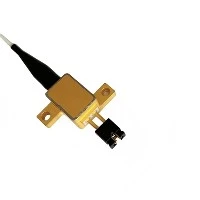
Traditional Laser Diodes have long been an important pillar in many fields such as communications and manufacturing. However, with the continuous advancement of technology, traditional laser diodes have begun to face performance bottlenecks. It is in this context that vertical cavity surface emitting laser (VCSEL) technology came into being. With its unique structure and excellent performance, it has quickly become a hot spot for research and application.
Compared with traditional laser diodes, VCSEL laser diodes have excellent performance in threshold current, energy efficiency and beam quality, making them play an increasingly important role in modern scientific and technological fields such as high-speed optical communications, precision machining, and biomedical imaging. Through an in-depth analysis of VCSEL technology, this article will reveal its key role in promoting the development of science and technology and show the emerging application areas that may be opened up in the future.
Vertical cavity surface emitting lasers (VCSELs) differ from other types of lasers in several key aspects:
Emission direction: VCSELs emit light vertically from the surface of the semiconductor chip, while most traditional lasers (such as edge-emitting lasers) emit light along the edge of the chip.
Manufacturing process: Compared with other types of lasers, the manufacturing process of VCSELs is generally simpler. This makes the manufacturing process simpler and less expensive.
Beam characteristics: VCSELs typically produce a circular and symmetrical output beam, which is very popular in many applications. In contrast, other lasers may have a different beam shape and may require additional optical elements to shape the beam.
Threshold current: VCSELs typically have a lower threshold current, which means they require less current to start lasing. This can reduce power consumption.
Modulation speed: They offer higher-speed modulation capabilities, making them suitable for high-speed data communications and optical interconnects.
Integration: VCSELs are easier to integrate into arrays, allowing multiple lasers to be manufactured on a single chip. This is not as simple for many other laser designs.
Temperature sensitivity: Some VCSELs may have better temperature stability than some other types of lasers, although this may vary depending on the specific design and materials.
Cost: Due to the simplicity of manufacturing and the potential for mass production, VCSELs are generally more cost-effective than some other specialized laser technologies.
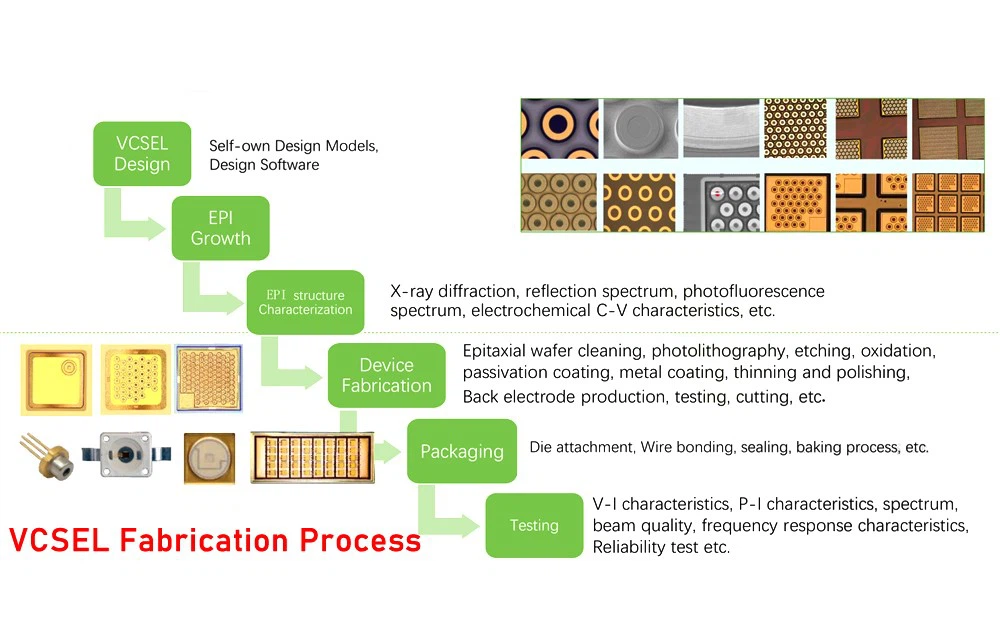
VCSEL laser diodes have shown strong competitiveness and application potential in the modern optoelectronic field with their significant advantages such as low threshold current, high conversion efficiency, tunability and spectral stability. These advantages enable VCSEL to play an important role in many fields such as communication, sensing, and medical treatment, and will continue to promote the development and progress of related technologies.
Advantages:
1. Low threshold current: VCSEL can achieve extremely low threshold current due to its unique vertical cavity structure and small active area. This low threshold current characteristic makes VCSEL require very little energy at startup, thereby reducing the energy consumption and heat generation of the device.
2. High conversion efficiency: The high conversion efficiency of VCSEL is another significant advantage. This high efficiency is mainly reflected in the process of converting electrical energy to light energy. VCSEL can produce higher light output under lower current drive, which is particularly important for application scenarios that require long-term operation or limited energy.
3. Tunability: VCSEL laser diodes have excellent tunability. By precisely controlling the injection current, the output wavelength and power of VCSEL can be easily adjusted, which enables VCSEL to adapt to different application requirements, such as spectral analysis and multi-wavelength transmission in optical communications.
4. Spectral stability: The spectral stability of VCSEL provides a guarantee for its performance in high-precision applications. Due to the structural characteristics of VCSEL, its emission wavelength is less sensitive to temperature changes, which means that VCSEL can maintain stable spectral output under different environmental conditions, which is critical for precision measurement and communication systems.
Application of VCSEL laser diodes in various fields
1. Application in communication technology:
High-speed network communication: Due to its high bandwidth and low energy consumption, VCSEL is widely used in fiber-optic communications and data centers. They are used to drive fiber channels and provide high-speed and long-distance data transmission capabilities.
Consumer electronics: In smartphones and tablets, VCSELs are used for close-range sensors such as facial recognition systems. These devices use the precise optical properties of VCSEL to enhance the interactivity and security of user interfaces.
2. Applications in biomedical engineering:
Medical imaging: VCSELs are used in devices such as fluorescence microscopes and flow cytometers to help doctors make more accurate diagnoses. Their spectral stability and tunability enable accurate excitation and detection of fluorescent markers.
Therapeutic and surgical equipment: In skin treatment and ophthalmic surgery, VCSELs are used as therapeutic light sources due to their high precision and flexible control. This includes laser devices for removing skin pigmentation and tools for performing delicate ophthalmic operations.
3. Applications in data storage and processing:
Optical disk drives: VCSELs are used to read and write data to optical disks, including CDs and DVDs. They provide constant optical power and precise focusing capabilities, which improves the speed and accuracy of data access.
Data processing: In large data processing centers, VCSELs are used for optical interconnects, transmitting signals through optical fibers, supporting large-scale data exchange, increasing processing speeds and reducing energy consumption.
4. Applications in industrial and consumer electronics manufacturing:
Manufacturing automation: VCSELs are used in robot vision systems to help robots perform precise positioning and object recognition. This is critical on automated production lines, such as automotive manufacturing and electronic product assembly.
Consumer electronics: In addition to smartphones, VCSELs are also used for distance sensors and proximity sensors in smart home appliances, such as refrigerators that open doors automatically or washing machines that adjust the amount of water automatically, which improves the intelligence level of products.
VCSEL laser diodes play a key role in many fields with their significant advantages such as low threshold current, high conversion efficiency, tunability and spectral stability. These characteristics enable them to provide efficient and long-distance data transmission in high-speed communication technologies, achieve precise diagnosis and treatment in biomedical engineering, improve speed and accuracy in data storage and processing, and promote automation and intelligence in industrial and consumer electronics manufacturing.
VCSEL laser diodes have demonstrated a wide range of application potentials in many fields due to their unique performance advantages. From communication technology to biomedicine, to data storage and industrial automation, VCSEL not only improves the performance of equipment, but also promotes technological innovation, making it an indispensable key component in the field of modern science and technology.
Contact information:
If you have any ideas, feel free to talk to us. No matter where our customers are and what our requirements are, we will follow our goal to provide our customers with high quality, low prices, and the best service.
 Email:info@loshield.com
 Tel:0086-18092277517
 Fax: 86-29-81323155
 Wechat:0086-18092277517


