


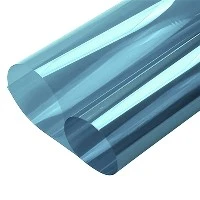

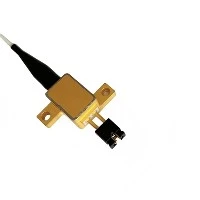
As one of the core driving forces of modern industrial manufacturing, the application of laser technology has penetrated into key fields such as automobiles, aerospace, and new energy. As two mainstream processing technologies, fiber laser cutting and welding are reshaping the boundaries of traditional manufacturing processes with their advantages of high efficiency, high precision, and low thermal impact. However, the core difference between the two technologies is not only reflected in the processing goals and process parameters, but also directly affects the safety protection strategy in the production environment. Acrylic laser protection plate (made of polymethyl methacrylate) has become an important choice for industrial laser equipment protection due to its unique optical properties and processing characteristics.
Technical differences between fiber laser cutting and welding
1. Energy action mechanism
The essence of fiber laser cutting is to instantly melt or vaporize the material through a laser beam with ultra-high power density (10⁶-10⁸ W/cm²) to form a slit. For example, when cutting stainless steel, the laser focus needs to be precisely controlled 0.5-1.5mm below the surface of the plate, and the slag is blown away by auxiliary gas (oxygen or nitrogen) to ensure that the incision is smooth and burr-free. Fiber laser welding achieves material fusion at a medium power density (10⁵-10⁶ W/cm²) and completes the connection through heat conduction or keyhole effect. Taking the welding of power battery tabs as an example, the laser pulse width and frequency must be strictly controlled to avoid excessive heat input leading to lattice distortion of the electrode material.

2. Process parameter comparison
Gas-assisted differences: Cutting relies on high-pressure gas (oxygen accelerates oxidation reaction, nitrogen inhibits oxidation) to remove the molten material; welding uses inert gas (such as argon) to cover the molten pool to prevent metal oxidation and pore formation.
Beam mode selection: Cutting often uses multi-mode optical fiber to expand the processing range (such as cutting thick plates of automobile bodies), while welding requires single-mode optical fiber or annular spot to improve energy focusing accuracy (such as micro-welding of medical devices).
Thermal management requirements: Welding requires precise control of heat input to avoid deformation. For example, the sealing welding of new energy battery cover requires the width of the heat-affected zone to be less than 0.3mm; cutting requires rapid heat dissipation to prevent secondary solidification of the cut seam.

3. Safety risk characteristics
Cutting risk: flying metal particles (speed can reach 50m/s), high temperature dust (particle size less than 10μm) and ultraviolet radiation are the main hazards. For example, the iron oxide dust generated when cutting carbon steel is flammable and needs to be equipped with an explosion-proof dust removal system.
Welding risk: strong reflected light (energy reflectivity can reach 90%), infrared radiation and plasma splashing generated when processing highly reflective materials (aluminum, copper) need to be focused on. The welding process may also cause metal vapor explosion due to keyhole collapse, resulting in secondary hazards.
Application scenarios and selection of acrylic laser protection plate
1. Core advantages
Optical performance: visible light transmittance can reach 92%, while blocking 1064nm fiber laser to maintain a clear operating field of view.
Lightweight design: The density is only 1/2 of glass, suitable for mobile protective barriers or handheld device observation windows.
Customized processing: supports secondary processing such as hot bending and drilling, and can adapt to special-shaped equipment structures.
2. Typical application scenarios
Open laser equipment: as the observation window material of cutting machines and welding machines, it meets the EN 60825 Class 1 safety standard.
Highly reflective material processing: in the processing of metals such as aluminum and copper, it prevents reflected light from causing eye damage to operators.
Medical and laboratory: used as a light-transmitting isolation window for weak laser treatment equipment to filter harmful band radiation.
3. Technical points for selection
Wavelength matching: for fiber laser (1.06μm), an acrylic plate with an optical density OD ≥ 6 should be selected, and the thickness is recommended to be 5-8mm.
Transmittance verification: it must comply with the EN 12254 standard to ensure that the visible light transmittance is greater than 80%.
Damage resistance: the tolerable power density must be higher than the laser peak value (such as 6kW fiber laser corresponding to a threshold of 10⁷ W/cm²).
4. Usage restrictions
Mechanical strength: weak impact resistance (only 5J impact resistance), mechanical collision or vibration environment must be avoided.
Temperature resistance: Long-term working temperature needs to be lower than 80℃, and high-temperature processing scenarios may cause deformation.

Performance comparison of acrylic protective plate and other materials
1. Acrylic vs. Polycarbonate (PC)
Light transmittance: Acrylic (92%) > PC (88%)
Impact resistance: PC (impact strength 50J) > Acrylic (5J)
Cost: Acrylic is 30%-50% lower than PC
2. Acrylic vs. Tempered Glass
Weight: Acrylic (1.18g/cm³) < Glass (2.5g/cm³)
Processability: Acrylic supports hot bending, and glass can only be cut flat
Anti-reflection: Glass needs to be coated to achieve laser protection, and acrylic can be achieved by doping absorbers
Safety operation and maintenance specifications
1. Installation precautions
Sealing treatment: Use silicone sealing strips to prevent dust intrusion and extend the life of the protective plate.
Edge protection: Chamfering or hemming design can reduce the risk of edge collapse during installation.
2. Daily maintenance
Cleaning method: Use lint-free cloth and neutral detergent to avoid cracking caused by solvents such as acetone.
Performance test: Use a laser power meter to detect OD value attenuation every six months. Replace it if it drops by 10%.

Conclusion
Acrylic laser protection panels occupy an important position in medium and low-risk laser processing scenarios due to their lightweight, high light transmittance and easy processing characteristics. Users need to make comprehensive selections based on laser parameters, environmental risks and cost budgets, and strictly follow standards such as EN 207 and EN 12254 for installation and maintenance. For high-power or high-impact environments, it is recommended to use polycarbonate or composite laminate structures to upgrade the protection solution to achieve a balance between safety and efficiency.