


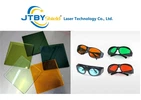

Laser welding technology, specifically utilizing a 1064nm wavelength, has revolutionized various industrial processes by offering precision, efficiency, and minimal heat-affected zones. However, the potential ocular hazards associated with laser operations demand the utmost attention to personal protective equipment, particularly laser safety glasses. It is a common misconception that safety glasses for 1064nm laser welding machines need only shield against the primary wavelength of 1064nm. This perspective underestimates the complexities of laser interactions with materials and the potential for secondary radiation emissions. This news delves into the reasons why protection cannot be solely confined to the 1064nm wavelength and elucidates the criteria for selecting comprehensive laser safety eyewear.
Primary Wavelength vs. Secondary Radiation
The 1064nm wavelength is the fundamental emission in many laser welding applications, but it is not the sole radiation source present during these operations. Nonlinear effects such as frequency doubling or tripling can generate additional wavelengths-secondary and tertiary harmonics-which also require attention. For instance, frequency doubling can produce a wavelength around 532nm (green light), and frequency tripling can result in waves near 355nm (ultraviolet light). These new wavelengths can pose significant risks to the eyes if not adequately protected.
In addition, laser interactions with materials can induce plasma generation, leading to the emission of high-energy photons across a broad spectrum, known as flash blindness or white flash, which can temporarily disrupt visual perception. Thus, safety glasses must account for this range of potential threats, extending beyond the primary 1064nm wavelength to cover a broader spectrum of electromagnetic radiation.

Multifaceted Laser Devices Emissions
Laser devices are versatile tools that can be configured for different tasks, including cutting, engraving, marking, and welding. Depending upon the setup, the same laser machine might emit various wavelengths. For example, a fiber laser primarily operating at 1064nm might switch modes to emit light at different wavelengths for specific applications. As such, laser safety glasses designed for welding operations must provide protection against not only the primary wavelength but also any other possible emissions from the laser device.
Operational Environment Considerations
The operational environment introduces additional considerations for protective eyewear. Auxiliary light sources, reflections from metal surfaces, and ambient light can contain harmful UV or visible radiation, contributing to cumulative ocular exposure. Safety glasses should filter out these potentially damaging light frequencies while allowing sufficient visible light transmission for clear sight during welding tasks. Striking a balance between protection and visibility is crucial in ensuring worker comfort and productivity.
International Safety Standards and Regulations
International safety standards such as ANSI Z136.1 in the United States and EN 207/EN 208 in Europe mandate specific optical density (OD) requirements for laser safety eyewear across a range of wavelengths. Compliance with these standards ensures that laser safety glasses offer certified protection levels against a broad spectrum of laser emissions. Users must select eyewear that conforms to the appropriate standard for their specific laser type and operational conditions.

Technical Specifications of Laser Safety Eyewear
The technical specifications of laser safety glasses play a pivotal role in determining their efficacy. Key factors include:
Optical Density (OD): Measures the attenuation capability of the lens at specific wavelengths. Higher OD values indicate greater protection but might compromise visible light transmission.
Visible Light Transmission (VLT): Reflects how much visible light passes through the lens, affecting wearer comfort and clarity of vision.
Ultraviolet (UV) and Infrared (IR) Protection: Important for safeguarding against non-visible radiation that can also cause harm.
Selection Criteria for Laser Safety Eyewear
When choosing laser safety glasses, several criteria must be considered to ensure comprehensive protection:
Wavelength Coverage: Glasses should protect against the primary laser wavelength and any secondary or tertiary emissions.
Compliance with Safety Standards: Ensure the glasses meet international safety standards relevant to your laser operation.
Comfort and Usability: The glasses should be comfortable to wear and allow for clear vision without causing strain or discomfort during extended use.
Scratch Resistance and Durability: Lenses must be durable enough to withstand the harsh environmental conditions of a workshop floor.
Frame Design: The frame should provide a snug fit to minimize light penetration from the sides and offer sufficient protection against mechanical impact.
Conclusion
In conclusion, the selection of laser safety glasses for 1064nm laser welding machines necessitates consideration well beyond the primary wavelength. The potential existence of secondary and tertiary harmonics, varied emissions from multifaceted laser devices, operational environmental factors, and strict international safety standards all dictate the importance of broad-spectrum protection. Laser safety eyewear must, therefore, cater to a wide range of wavelengths while maintaining usability and comfort. By diligently selecting laser safety glasses that align with these criteria, workers in laser operations can safeguard their vision and enhance both safety and productivity in the workplace.